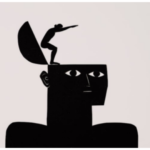


HUMOUR

Just as one man’s meat is another man’s poison, humour can also be problematic. What amuses me may not be funny to someone else.
Humour looks effortless when we read it—but writing it is surprisingly difficult. Here’s why…
It depends on timing. In conversation, tone, pauses, and expressions do half the work. In writing, you have only words. The rhythm of a sentence, the placement of a punchline, even a comma—everything must land perfectly without the support of voice or gesture.

Another reason is that what’s funny is deeply subjective, as noted earlier. One person’s laughter is another’s indifference. Humour is shaped by culture, age, language, and personal experience. Writing something that resonates widely without becoming bland is a delicate balance.

Sometimes the tone can easily misfire. A joke intended as light may come across as insensitive, sarcastic, or flat. Especially with forms like black humour, the writer must walk a very fine line between wit and discomfort.
I find that writing simple, humorous stories is extremely hard. The funniest lines are often short and simple—but achieving that clarity takes precision. It’s much harder to write one sharp, funny sentence than a long explanation.
Over-explaining a joke kills it. Under-explaining may make it unclear. Knowing exactly how much to say—and when to stop—is one of the toughest skills in humorous writing. It requires control of language and restraint.
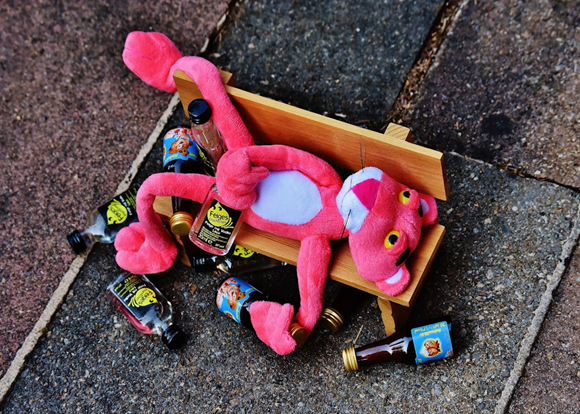
Humour is intimate. It reflects how a writer sees the world. That makes it powerful—but also risky, because it exposes individuality in a way that not all readers may connect with. It reveals the writer’s voice very directly-and this is a strict no-no in orthodox storytelling.
Humour requires immense balance behind the scenes. I find it strange when people over-dramatize trivial issues, especially given the real suffering in the world.
I thought of a few situations that are universally considered funny. These moments don’t rely on language or culture as much as they rely on shared human reactions—surprise, innocence, awkwardness, and self-realisation—which is why they tend to resonate widely.

I find simple situations are the funniest … Children mispronouncing or inventing wordsand confidently saying something incorrectly—yet with absolute seriousness—creates a natural, innocent humour that cuts across cultures.
When animals behave like humans. Eg – a dog sitting upright like a person, or a cat reacting dramatically to something trivial—these little echoes of human behaviour in animals tend to amuse almost everyone.

All of us must have experienced it one time or another – mistaken identity moments
where we wave enthusiastically at someone who isn’t actually waving at you—and then awkwardly turning it into a stretch or hair adjustment; trying to push a door that clearly says ‘Pull’; when someone trips slightly, regains balance, and then looks around to check if anyone noticed—the relief mixed with mild embarrassment often evokes gentle laughter.
— a universally recognised comic situation!
These examples rely on irony and contrast rather than cruelty. Black humour walks a fine line—it draws a smile from situations that are otherwise grim, often by revealing irony rather than making light of suffering. It is most effective when it invites reflection even as it makes us smile.
My stories in the chapter on humans are mainly based on ‘Observational Humour’.Drawn from everyday life—those small, relatable moments we often overlook. It finds comedy in queues, traffic, family habits, or social behaviour.
I tried my hand at ‘Satirical Humour’ – in the story ‘Can 4 minutes change your destiny.’ I enjoy using wit to criticise or expose flaws in society, politics, or human nature. It often carries a deeper message beneath the laughter.

I find writing physical comedy to be one of the most challenging. Exaggerated actions, falls, mishaps, and visual gags-Think of someone slipping on a banana peel or getting tangled in a curtain. It brings an immediate grin to the face.
Whereas ‘Ironical (or Dry) Humour is subtle and understated, where the humour lies in saying the opposite of what is meant, or in the quiet mismatch between expectation and reality. I tested this idea out in quite a few stories, which examine society’s ridiculously biased reaction when a woman gives birth to a girl child.I feel ‘Self-deprecating Humour’, together with childlike humour (innocent, playful), when a person makes light of their own flaws or mistakes, feels warm and relatable because it shows humility and self-awareness.
In my book, many of the stories could have been showcased under humour, because, after all, life is a creation and manifestation of our own minds. Nothing is real. As the wise ones say, ‘to be enlightened, one should be light at heart.’