


GARBAGE, GARBAGE EVERYWHERE
For me, disgust is another form of anger. Like most people, I experience everyday disgust whenever any of my five senses are assaulted -bad smells, spoiled food tastes, loud music, overflowing garbage, careless, harsh words, and cruel physical abuse that can harm the body. These actions affect everyone. But I also feel disgust at deeper issues.
My main crusade is the lack of accountability for garbage segregation. While others in my community work on law and order, social gatherings, and civic efforts, I am focused on encouraging people to segregate their garbage.
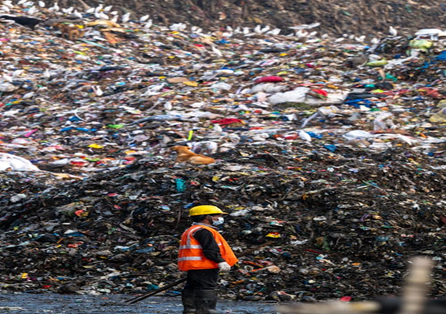
I worked for over 5 years, knocking on reluctant neighbours’ doors, distributing free dustbins and pamphlets, and guiding waste collectors to each house with a firm hand. It was a successful day when I could clear ‘black spots ‘-garbage-filled zones carelessly dumped on ‘no-man’s land’. What is disgusting is not the garbage itself, but humans who have auctioned their consciousness for convenience and laziness. This lack of concern for the environment is peculiar to Indians, who want their houses spotless but let the neighbourhood suffer.
CRUELTY IN ANY FORM
Cruelty in any form is disgusting to my eyes… cruelty to animals, the less fortunate, children, and senior citizens. It seems to have become the norm to abuse these categories of people and creatures, as they appear weak and helpless to the bullying majority. But true grit is seen in a human being who, despite being more powerful, still shows humanity and kindness.
CHILD MARRIAGE AND HUMAN ABUSE
Another issue that riles me is child marriage, the scourge in our country; it is a real menace.How can we justify marrying young, underage girls to older men? It is usually economic necessity in impoverished countries that forces hapless parents to sell their young daughters to men. But more disgusting is the fact that some use religious laws as justification for destroying the minds, lives and bodies of young children by forcing, beating and terrorising them


into acquiescence. But the blame lies squarely on all of us – not only the parents who unlawfully give their consent, but also the tone-deaf silence of an indifferent society that looks the other way, refusing to hear the chilling cries for help from innocent girls. Trafficking, prostitution, child abuse – all these are signs of a rotting mind of humanity, as stinking as the garbage that they callously throw into the streets, rivers and oceans. In my eyes, there is no difference – both are damning evidence of indifference and ennui that has set into society at large.
Connected to the above is the blatant orthodoxy that imposes stricter rules on women than on men. In many religions and philosophies, women have been misinterpreted to prevent them from expressing their independence.
My stories, time and again, reflect this injustice, which not only elicits disgust in me but also anger and pity. You will see glimpses of my attempt to shine a torchlight on rampant female abuse, encompassing all classes, from the lower, middle and upper classes of people.
OVERT DISPLAY OF ILL-BEGOTTEN WEALTH

The indiscriminate display of ill- begotten wealth has bothered me since I was young. I belonged to a hard-working middle-class family, but we lived in an elite part of Mumbai. So, from childhood, I saw that many of the rich neighbours had material wealth, but their children suffered emotional poverty. The parents were too busy amassing wealth and partying, leaving the children to be cared for by maids and indifferent staff. My childhood observations paved the way for many of my stories – The Indian wedding carnival, and adopt me, reflect my sense of disgust at the decay in relationships that seems peculiar to wealthy society.
As a child, I saw life in ‘black and white’ and found it hard to accept the grey areas. Bribery, treachery, and the manipulation of human rights have always filled me with dismay.

That is how my story, ‘Who is the real bewarsi?’ (a Kannada word which means rascal), shines a light on corruption, which starts with the individual but permeates every fabric of society once the law allows it to take root. It is like a many-headed demon; cut one head off, and the others grow back again, swallowing the good and the bad equally and relentlessly. Bribery is Disgusting – both the person who demands it and the person who succumbs to blackmail and gives in.
Yes, I know that standing up for what you believe in can cost you what you desperately need, and it requires time and patience. The wait for justice could be a long, difficult road, but justice does prevail. The rule of law does work. The corrupt can be punished. Nothing is impossible when there is a will to do the correct, lawful behaviour. My greatest disgust is that we, as humans, do not value God or nature, though we pray to and eulogize both.
DESTROYING OUR ENVIRONMENT
For me, they are an intangible, loving, and omniscient force, a single, grand reward. When I see rampant holes in mountains from mining, burnt-out flat fields where forests once thrived, and dried waterbeds, or, even worse, sewage water creating a disgusting stench, my sense of the unfairness of it all turns into disgust towards us humans. No other species takes more than it needs, destroys for greed rather than need, or kills other species for monetary gain. And no species is as stressed and diseased as we humans, because of this greed for power, space, and money. We have become parasites. All creatures coexist, helping each other through their activities. It is only mankind that destroys its fellow humans, its families, womenfolk, children, and nature with consistent cruelty. I have touched upon this vast, unsolvable subject in a passage titled ‘Monologues -Infinite, Earth and Humankind.’

To conclude, only when we feel disgust at acts that are abhorrent to our values, and actively participate in making the change within ourselves first and then with society at large, will we be able to wake up to a more equitable, clean, law-abiding world.